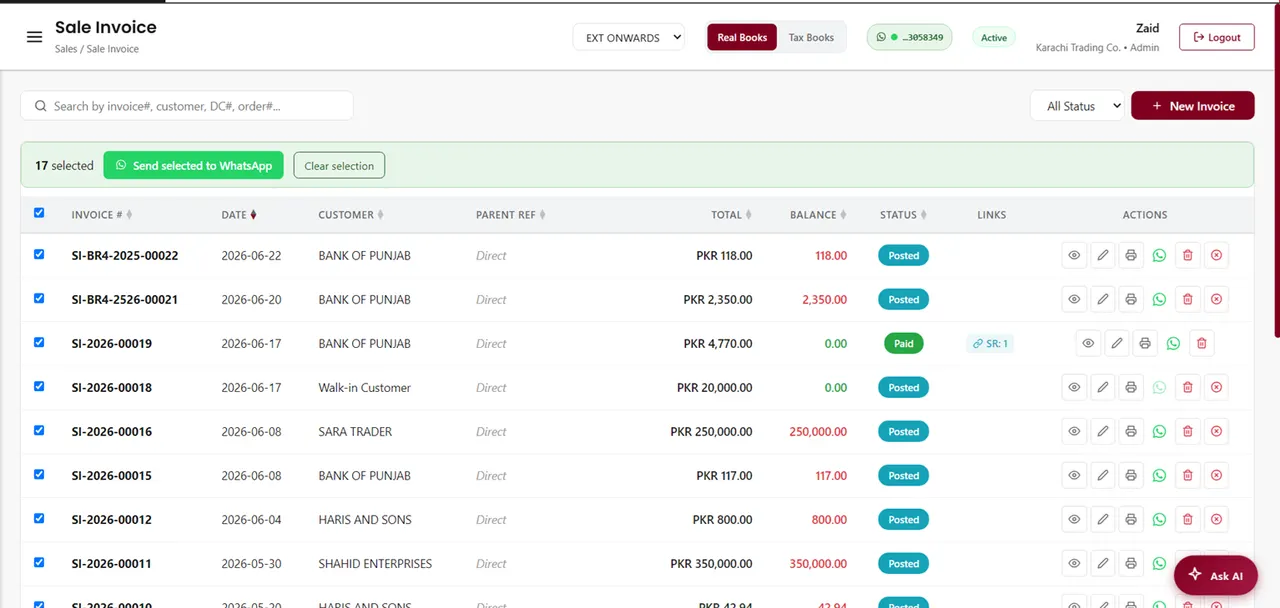
Yes — FBR digital invoicing is mandatory in Pakistan for sales-tax-registered persons. Under SRO 1852(I)/2025, businesses must generate invoices electronically and transmit them to FBR in real time through PRAL, which returns an FBR invoice number and QR code. The requirement was phased in during late 2025, with the final catch-all category ("all remaining registered persons") live from 31 December 2025 and enforcement widening through 2026. If you are registered for sales tax, this almost certainly applies to you. This page explains who must comply, what is required, the deadlines and the penalties — but confirm your own position with FBR or your tax advisor, as rules change.
Who must comply?
The mandate targets sales-tax-registered persons, and it has been rolling out in phases by category rather than all at once. In broad terms:
- Sales-tax-registered businesses — the core of the mandate, phased in through 2025 with the final category live from 31 December 2025.
- Tier-1 retailers — those in air-conditioned shopping malls, using a card (POS) machine, with a monthly electricity bill over Rs 1.2 million, or running large-format or chain stores — must also integrate their POS with FBR for real-time invoicing.
- Service businesses — SRO 288(I)/2026 (early 2026) widened online-integration rules to pull in many service providers for the first time.
- If you are not registered for sales tax, the digital-invoicing mandate does not apply to you yet — but check whether your turnover or activity requires registration in the first place.
What is actually required?
To be compliant, each taxable-supply invoice must be issued through a system connected to FBR and carry the elements FBR validates:
- Real-time transmission to FBR through PRAL (directly or via a licensed integrator).
- A unique FBR invoice reference number (IRN) returned by FBR, roughly 22 characters.
- A valid FBR QR code printed on the invoice, which buyers can verify.
- A digital signature, plus the standard sales-tax invoice fields (your STRN, the buyer's registration number for B2B sales, description, quantity, value, tax and total).
- Practical prerequisites: an active STRN, and often a static IP from your internet provider for the integration.
For the full field-by-field breakdown, see our guide on what a sales tax invoice must include and the FBR digital invoice format.
What are the deadlines?
The rollout has been by category, and FBR has revised specific dates more than once, so treat any single date as something to verify. The key milestone is that the final catch-all category — all remaining registered persons — was set live from 31 December 2025, with enforcement broadening through 2026. Because dates have shifted, the safe approach is not to wait for a deadline but to integrate as soon as you know you are covered.
What are the penalties?
Penalties for failing to comply, or for repeated default, run from Rs 500,000 up to Rs 3,000,000. Beyond the fines, non-compliant invoices can create problems for your buyers (a registered buyer needs a valid invoice to claim input tax) and expose you in an audit. The cost of getting compliant is far lower than the cost of a penalty. Confirm the current penalty schedule with FBR.
How do I comply?
There are three practical routes, covered in detail in our guide to FBR digital invoicing software:
- Use FBR's free PRAL portal — manual entry, fine for very low volume.
- Use accounting/ERP/POS software with FBR built in — for most SMEs this is the practical choice, so invoices transmit automatically as you issue them (from a few thousand rupees a month).
- Add a dedicated e-invoicing tool to your existing books — for high volume or legacy systems.
One thing worth knowing: under Budget 2026-27, businesses can claim a tax credit worth 10% of their investment in FBR-integration software, which reduces the real cost of compliance. Ask your tax advisor how it applies. This page is general information, not tax advice — confirm your obligations, deadlines and penalties with FBR or a qualified advisor.