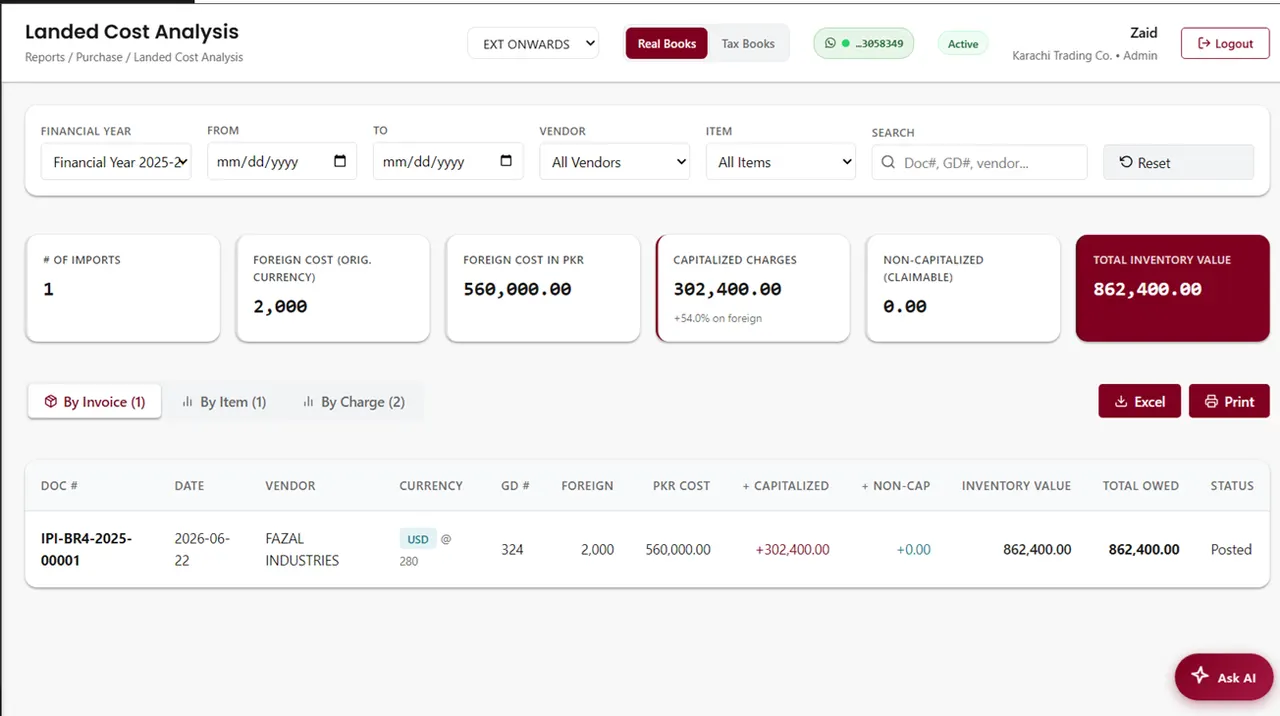
Landed cost is the total real cost of an imported item once it reaches your warehouse — not just the supplier's price, but also duty, freight, insurance, clearing and any other charges. If you price off the supplier invoice alone, you are quietly eating those extra costs.
What landed cost includes
- Product cost (the supplier's price).
- Customs duty and import taxes.
- Freight and shipping.
- Insurance.
- Clearing, handling and port charges.
- Any bank or documentation fees tied to the shipment.
How to calculate it
Add up all the shipment's extra charges, then distribute them across the items in that shipment — usually by value, quantity or weight. The result is a per-item cost that reflects what each unit truly cost you to land. Example: if a shipment's duty and freight add 18% on top of supplier price, an item that cost 1,000 actually costs about 1,180 landed.
Why it matters
- You price for real profit instead of guessing.
- Your stock value and balance sheet are accurate.
- You can compare suppliers fairly (a cheaper price with high freight may cost more landed).
Doing it without spreadsheets
Allocating charges by hand in Excel is slow and error-prone. A good ERP does it for you: you enter the shipment charges once and the system spreads them across items automatically, updating each item's cost and your stock value.
In short
Landed cost is the true, all-in cost of imported goods. AmalERP's import module distributes duty, freight and clearing across your items automatically, so every product carries its real cost. See our page for importers.