Mobiles, laptops and batteries aren't like bags of rice — each unit is high-value and individually identifiable. Serial number tracking (IMEI for phones) ties every physical unit to its own purchase, sale and warranty record, so you always know exactly which device went where.
What is serial / IMEI tracking?
Each unit is recorded by its serial number — the IMEI in the case of phones — when you buy it, and that number follows it through to the sale. You're no longer tracking "10 phones"; you're tracking exactly which 10 phones.
Why mobile & electronics shops need it
- Know the exact cost and margin on each individual unit.
- Prevent theft and swapping — every unit is accounted for.
- Handle warranty claims by serial, with full history.
- Match returns to the exact unit that was sold.
- Trace a faulty batch back to the supplier it came from.
Serial vs batch tracking
Serial tracking follows each individual unit — right for electronics. Batch tracking groups items that share an expiry date — right for pharmacy, food and FMCG. Many businesses need both; see our guide to batch and expiry tracking if you also hold dated stock.
At the counter
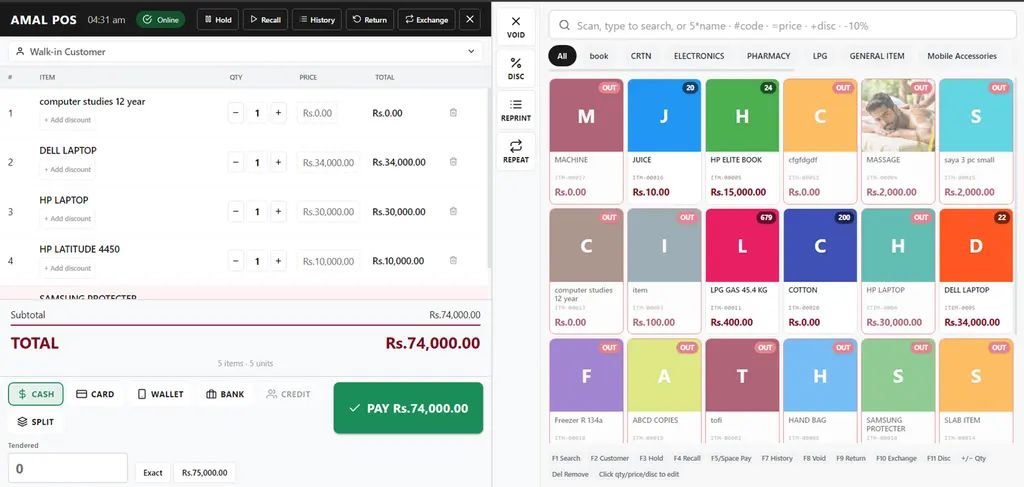
At the point of sale, you scan or enter the serial/IMEI, and the system records which exact unit went to which customer — so the sale, the warranty and the stock all line up without manual bookkeeping.
How AmalERP does it
AmalERP supports serial-number tracking for items like batteries, mobiles and laptops, alongside batch and expiry tracking for dated stock — all flowing into your POS, inventory and accounts. Run your mobile or electronics shop with every unit accounted for.