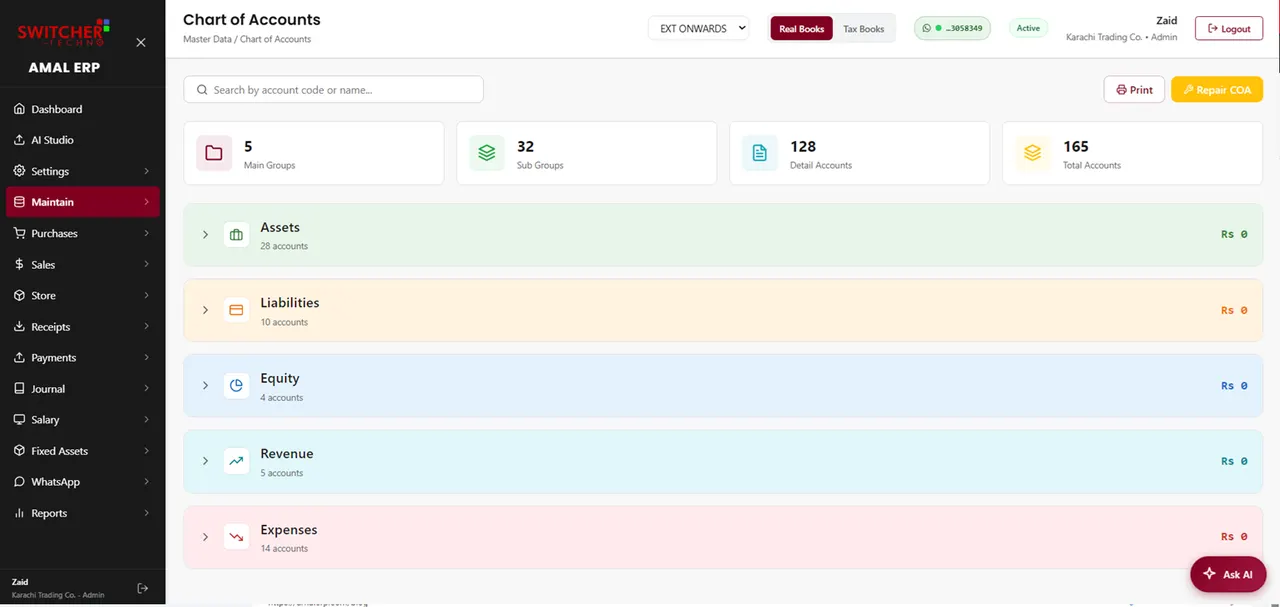
Double-entry accounting is a method where every transaction is recorded in two places, so the books always stay balanced. It has been the foundation of trustworthy bookkeeping for centuries — and it's what separates real accounting software from a simple cash log.
The core idea: every transaction has two sides
When money moves, something is given and something is received. If you buy stock for cash, your stock goes up and your cash goes down. Double-entry records both sides — a debit and a credit — and the two must always equal each other.
Debits and credits, simply
Don't overthink the words. A debit and a credit are just the two sides of every entry. The golden rule is that total debits must equal total credits for every transaction. If they don't, something is wrong — and good software won't let you save it.
Why it matters for your business
- Your books always balance, so reports can be trusted.
- Errors are caught immediately instead of at year-end.
- You get real financial statements — profit & loss, balance sheet, cash flow.
- Auditors, banks and tax authorities take your numbers seriously.
Single-entry vs double-entry
Single-entry is like a personal chequebook: you note money in and money out. It's simple, but it can't produce a real balance sheet or catch mistakes. Double-entry tracks the full picture, which is why every serious business uses it.
How good software helps
Modern ERP does the double-entry for you. When you raise an invoice, record a payment or run payroll, the system posts the balanced entry automatically and blocks anything that doesn't balance. You get the rigour of double-entry without needing to be an accountant.
In short
Double-entry accounting records both sides of every transaction so your books always balance and your reports are trustworthy. AmalERP is built on a real double-entry engine that posts every entry automatically and refuses to let your books go out of balance.