Pakistan's federal Budget 2026-27, effective from 1 July 2026, is a mix of genuine relief and new obligations for small and medium businesses. Some of your tax burden gets lighter; some compliance becomes non-negotiable. Here's what actually matters for an SME owner, in plain English.
1. Super tax relief for most businesses
Super tax has been abolished for individuals and companies with income up to Rs 500 million, and cut from 10% to 8% above that (banking, exploration & production and fertiliser are excepted). For the vast majority of SMEs, that means the super tax burden is simply gone - real cash freed up for the business.
2. Lower income tax slabs
The budget revises income tax slabs with relief in the Rs 2.2 million to Rs 7 million range - for example, the Rs 2.2m to Rs 3.2m band drops from 23% to 20%, and Rs 3.2m to Rs 4.1m from 30% to 25%. For owner-operators and staff in that range, that's more take-home income.
3. A simple fixed tax for small retailers
Retailers with annual sales up to Rs 200 million get a flat fixed tax of Rs 25,000 - a simple, predictable amount instead of complex calculations. Easier to plan around, easier to comply.
4. FBR digital invoicing becomes mandatory
This is the big obligation. FBR is making digital invoicing compulsory for active sales taxpayers, with manual sales-tax invoices being phased out and a reported compliance deadline around 31 July 2026, backed by penalties and more auditors. If you're sales-tax registered, getting FBR-ready is no longer optional. See our step-by-step FBR e-invoicing readiness checklist to prepare.
5. A 10% tax credit for FBR-ready software
Here's the silver lining that pairs with the mandate: the budget introduces a tax credit equal to 10% of the investment you make in electronic resources that integrate with FBR's system. In plain terms, when you invest in FBR-ready software to digitise and report your sales, the government effectively gives back 10% of that cost - turning a compliance expense into an incentive.
6. Some everyday goods move into the sales-tax net
The sales-tax base is being widened, with several fast-moving consumer goods (reported to include items like dairy, cooking oil and infant formula) brought into the net. If you trade or distribute FMCG, check which of your lines are now taxable and price accordingly.
What to do now
- If you're sales-tax registered, plan your FBR digital invoicing integration before the deadline.
- Ask your tax advisor how the super tax and slab changes affect your specific numbers.
- If you sell FMCG, review which items are now taxable.
- Keep clean, digital books so you can react to changes quickly.
How AmalERP helps
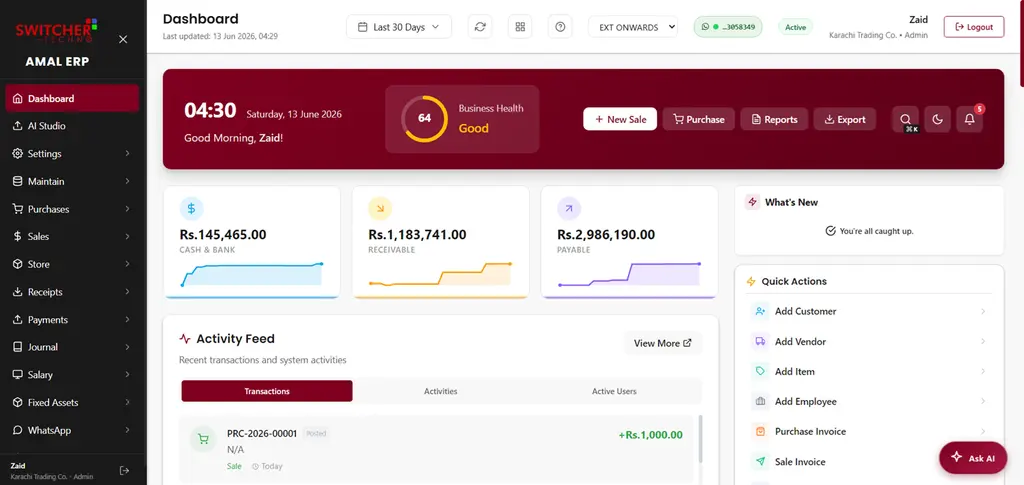
AmalERP connects to FBR digital invoicing through PRAL, so real-time e-invoices with IRN and QR are built in - which also positions your software spend for the 10% credit. Beyond compliance, its live dashboard, double-entry accounting and reports make it easy to see how any budget change lands on your bottom line.
This article is general information, not tax advice. Confirm the exact rules and deadlines with FBR's latest notification or your tax advisor.