Budget 2026-27 widens the sales-tax base, and several fast-moving consumer goods that were previously outside the net are reported to be moving into it - items like dairy products, cooking oil and infant formula. If you distribute or trade FMCG, this changes your pricing, your paperwork and your compliance. Here's what to think about.
What's changing
Goods that were exempt or zero-rated are being brought into the sales-tax net, and many everyday FMCG lines fall under the Third Schedule of the Sales Tax Act. Check exactly which of your products are now taxable - don't assume; the list is specific and your advisor can confirm it.
Why the Third Schedule is different
Third Schedule items are taxed on their printed retail price (the price marked on the pack), not on the price you sell at along the chain. That means the tax is calculated on the MRP, so distributors and retailers need their systems to handle retail-price-based tax correctly - a common place where manual books go wrong.
What it means for distributors
- Your pricing and margins need recalculating on newly taxable lines.
- Invoices must show the correct sales tax, in the format FBR now expects.
- With FBR digital invoicing mandatory, those invoices increasingly need to be reported in real time.
- Your stock and tax records have to stay consistent across many SKUs and batches.
Batch, expiry and tax - all at once
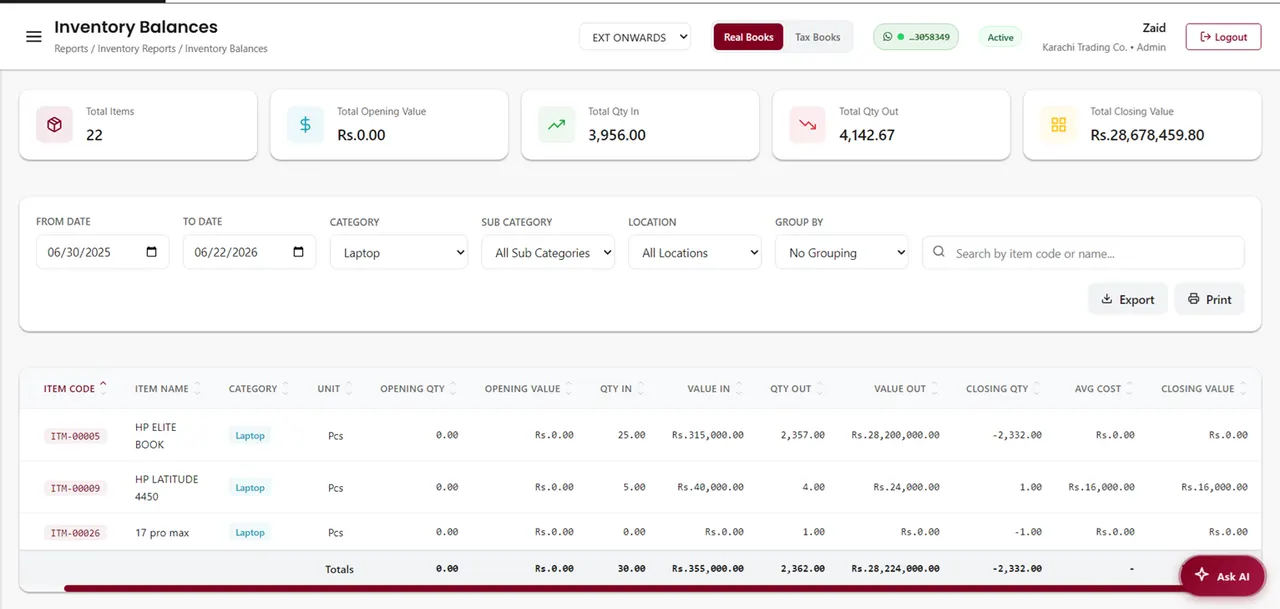
FMCG distribution already means tracking fast-moving stock by batch and expiry. Add sales tax on top and manual books struggle. The practical answer is software that tracks batch and expiry, calculates the right tax, and produces FBR-ready invoices from the same system.
What to do now
- Confirm which of your products are now taxable and at what rate.
- Update your prices and invoice templates.
- Get FBR digital invoicing in place before the deadline.
- Move to a system that keeps stock, batch/expiry and tax in one place.
How AmalERP helps
AmalERP is built for distribution: the full order-to-cash flow, multi-location stock with batch and expiry tracking, correct sales-tax handling, and FBR-ready digital invoicing - all in one system. See how it fits distributors and FMCG businesses.
This article is general information, not tax advice. Confirm which goods are taxable and the applicable rates with FBR's latest notification or your tax advisor.