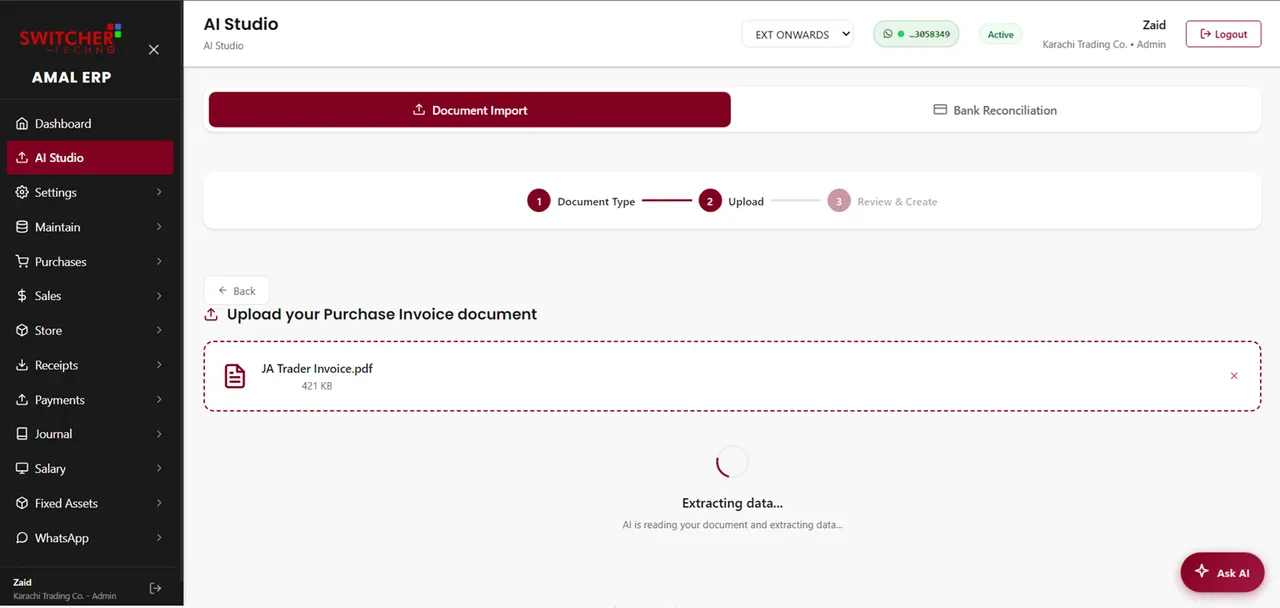
AI in accounting means software that reads your documents, suggests the entries and spots problems — so you spend less time typing and more time deciding. In 2026 it has gone mainstream: the vast majority of accounting professionals now use AI in some form. The good news for small businesses is that the same power is now built into everyday accounting software.
What AI actually does in accounting
- Reads invoices, receipts and bank statements (using OCR) and drafts the entries for you.
- Categorizes transactions by learning your patterns over time.
- Reconciles bank statements against your books.
- Flags anomalies, duplicates and likely errors.
- Answers plain-language questions about your numbers.
From chat to real work: 'agentic' AI
The big shift in 2026 is agentic AI — AI that doesn't just answer questions but actually drafts transactions and actions for you to approve. You stay in control; the AI removes the grind. Businesses that adopt it well report month-end closes shrinking from around twelve days to just a few.
Where it helps most
- Data entry from vendor invoices and bank statements.
- Bank reconciliation.
- Expense and receipt capture.
- Real-time cash-flow visibility.
- First-draft reports you refine, instead of building from scratch.
What AI won't (and shouldn't) do
AI shouldn't post unchecked entries or make your final tax and financial decisions. Treat its output as a smart first draft that a person approves. Keep proper double-entry discipline and a full audit trail — that's what makes your books trustworthy at year-end, with or without AI.
What to look for in AI accounting tools
- AI that drafts entries for you to approve — not silent auto-posting.
- Works with PDFs, images and Excel, not just typed input.
- Built on real double-entry accounting.
- Keeps a complete audit trail.
- Understands local tax (e.g. GST and withholding tax).
- Keeps your business data private and secure.
Where AmalERP fits
AmalERP has AI built in. AI Studio imports vendor invoices, bank statements and spreadsheets into draft entries you approve, and helps reconcile your bank. A plain-language assistant answers questions over your live business data and can draft transactions for you to confirm — so the tedious work shrinks while you stay firmly in control.